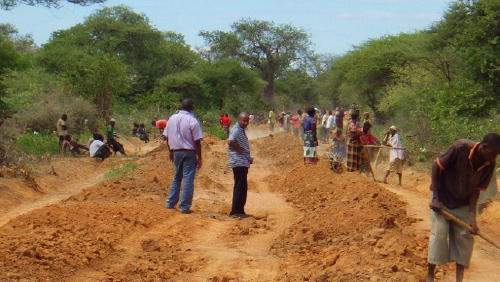
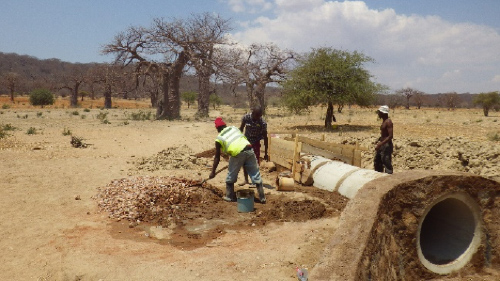
In the regional road project of Tanzania, a road project utilizing Labor-based Technology (LBT: Other than the utilization of the minimum necessary equipment, this is a construction method of conducting road maintenance using a labor-intensive style) is promoted. This is a project that targets the regional road bureau employees (The client) and the road installation companies (contractors) and aims to support skill improvement. Our company will participate as a “Monitoring Expert”.
Regarding Tanzania’s regional road development/maintenance, there are the problems of insufficient financing, inadequate expertise and experience of the client/contractors, insufficient equipment and delays in the operational budget. Working within a limited budget, the skill improvement of government employees and contractors, as well as the improvement of the regional road development/maintenance management process is required.
Monitoring, after the start of the project, involves confirming the status of progress of the project activity based on the plan, and making course corrections as necessary. The process of re-evaluating the activity and results in response to the various changes that occur during the execution period is the main pillar of project management. For example, we conducted a survey of the degree of satisfaction of the primary users of the regional roads, the local residents. By reflecting the opinions of the local residents in the regional road maintenance project, we aimed to achieve construction of roads that would be easy for the local residents to use. Also, in order to enable continuation of the activity after the completion of the project, we assisted in the creation of the system of the monitoring method.
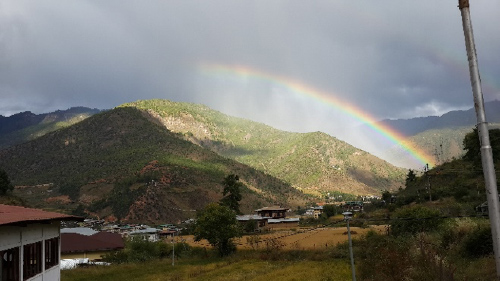
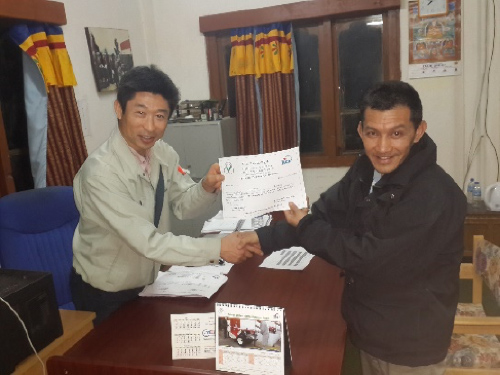
As Bhutan’s agricultural zone belongs to its mountainous region, the efficiency of agriculture is generally low, and as the shortage of agricultural workers has become apparent due to the movement of the younger generation to the urban areas and the aging of the farming village populations, a policy to shift to use of more farming equipment has been promoted. The introduction of farming equipment, which is the basis of this government policy, has been supported by Japan for a period spanning more than 20 years, and the organ in charge of the execution of this policy is the Agriculture Machinery Centre (AMC). In order to support the efforts of the Bhutan side to strengthen and improve the efficiency of its operational structure and to achieve independence, AMC is conducted the project in its main area, the “Strengthening Farm Mechanization Project (2008-2011)”. As further efforts, concerning farm machinery functionality and safety, we created a national certification standard, and to promote the improvement/development of farm machinery and its efficient use, we conducted the “Strengthening Farm Mechanization Project Phase II (2014-2017)”.
AMC established a monitoring/evaluation section (M&E), however, it was not able to perform effective monitoring. Under these circumstances, our company strengthened the function of the monitoring of the execution status, and we provided guidance for actions to lead to the improvement of the operations. On site, we held a workshop concerning the creation of the annual report, established a monitoring method that included a format for data collection, established AMC standards and took actions toward achievement of their realization, and also established indicators to measure the degree of achievement.
Evaluation Survey is a total survey conducted after completion of a project, and is referred to as an evaluation conducted in order to objectively investigate whether results can be observed even after the project completion.
In this project, the following 4 projects were evaluated.
(1) Cambodia: The Project for Replacement and Expansion of Water Distribution Systems in Provincial Capitals
(2) Thailand: The Project on a Comprehensive Flood Management Plan for the Chao Phraya River Basin
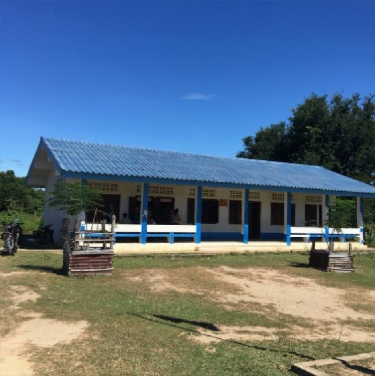
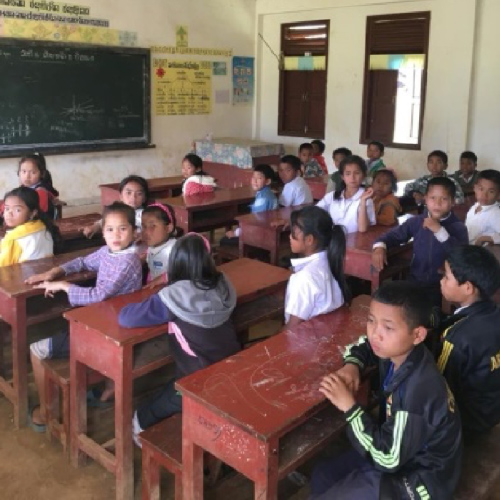
(3) Laos: The Project for the Improvement of School Environments in Champasack and Savannakhet Provinces
(4) Laos: The Project for the Improvement of School Environments in Three Southern Provinces
(1) In the post-project evaluation, visits were made to the water departments of Preah Sihanouk, Krong Battambang and Pursat, and interview surveys were made concerning whether the repaired water pipes were being properly used, and whether the users had increased according to plan. We were able to confirm that considerable results had been achieved.
While the regional surveys proceeded smoothly, although we repeatedly tried to arrange interviews with the government agency in charge, the Ministry of Industry and Handicrafts in the capital, Phnom Penh, we were not able to easily set up a meeting. We were finally able to have a brief discussion with the respective officials. In the activities outside the survey we experienced great difficulty.
As the tuition fee for national universities is free in Egypt, the number of students is increasing, and because the number of students per instructor has grown the decline in the quality of education has become serious. Also, lectures and classroom instruction are centered around theory, and as the number of universities conducting practical/leading edge education are limited a problem has arisen of superior students leaving to study abroad.
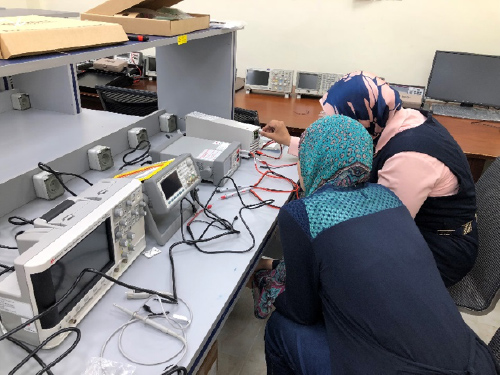
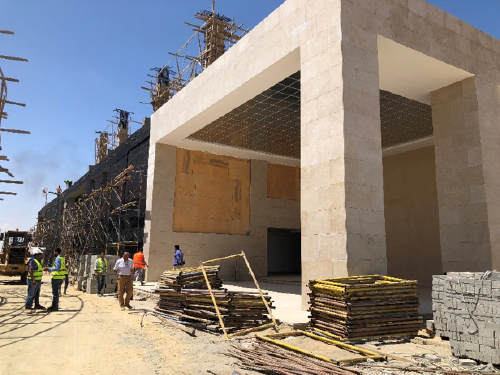
In this situation, in 2009 the Japanese and Egyptian governments decided to utilize the special features of Japanese engineering education, and based on the concept of “Small numbers of students, centered around graduate school and research, and practical while providing education meeting international standards”, a bilateral agreement was concluded establishing the Egypt-Japan University of Science and Technology (E-Just). INTEM was contracted by JICA to conduct grant aid project consulting. The scope of the Japanese side activity was the arrangement of research/practice equipment for the newly established 8 subject Engineering Department. The Egyptian side was responsible for the construction of the campus. As the consulting work we conducted an on site survey (national plan, meeting with the responsible professors, blueprint confirmation, location confirmation, market survey, budget status, etc.). After returning to Japan we put together the project proposal, calculated the project budget, supervised the bidding, contract and purchasing. The final stage consisted of on site installation supervision, which we conducted until the hand over.
This was a long-term project that required us to consider a period spanning 7 years.
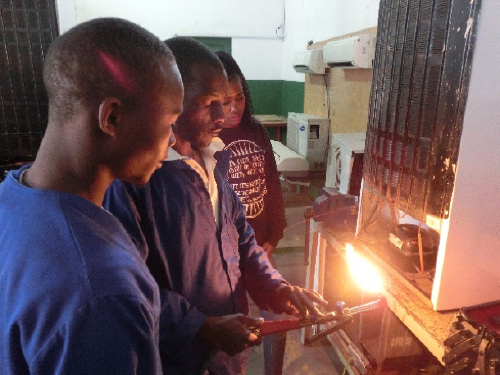
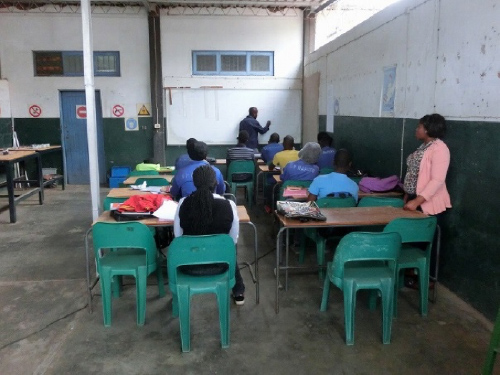
Mozambique has abundant natural resources such as coal and natural gas, and while many overseas companies have entered the country increased their investment, there is a drastic shortage or technicians in the industries of construction/civil engineering, welding and steel. In order to cultivate industrial human resources, the Mozambique government is engaged in activities to expand and improve the quality of vocational training. However, because of the shortage of vocational training equipment and the aging of facilities, it is not currently possible to provide adequate training.
In this project, by arranging the equipment and facilities for a vocational training center in each of the following major cities in the northern, central and southern regions, respectively: Nacala City in Nampula Province, Quelimane City, Zambezia Province, and Matolo City, Maputo Province, the plan is to improve the quality of vocational training and contribute to the cultivation of regional industrial human resources. Through the execution of this project, it will be possible to provide high quality vocational training opportunities, and by cultivating human resources that meet the needs of industry, it is expected to assist the promotion of regional industries and contribute to the vitalization of the economy.
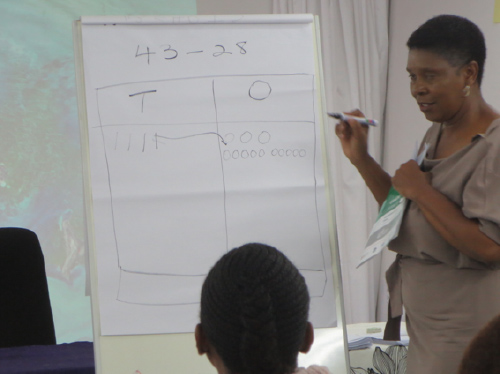
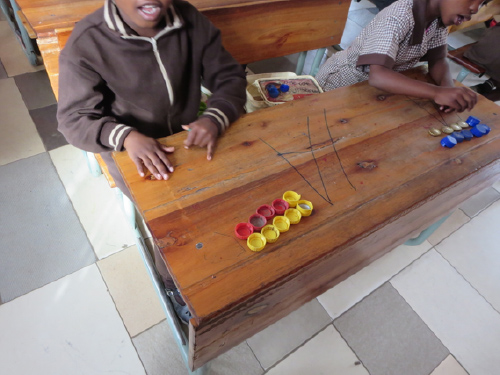
In South Africa, after the abolition of apartheid, the 1994 general election gave birth to the administration of President Mandela, which introduced new policies at a rapid pitch. However, now, 25 years later, especially in the subjects of arithmetic and mathematics, improvement in academic ability has not been achieved.
One source of worry is that when children reach the level of what would be the junior high school rank in Japan, that many can be observed who count their fingers or circles that they have drawn in order to find the answers for math problems. This is because they did not receive proper instruction at the lower grade levels regarding the rank of numbers, addition, which involves the increase of numbers, subtraction, which involves the decrease of numbers, and the multiplication tables. The counterparts: the persons in charge of basic education, have finally begun to have a major interest in mathematics education. However, up till now there hadn’t been any approach demonstrated to the instructors that caused them to clap their hands together and say, ‘That’s it!’. First, we obtained the understanding of the instructors. Then we created a guidance proposal for instructors that included arithmetic study hints to allow children to experience the enjoyment of thinking for themselves, provided technical support for the revision of the curriculum.
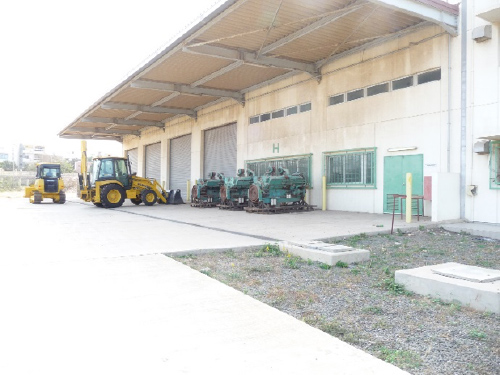
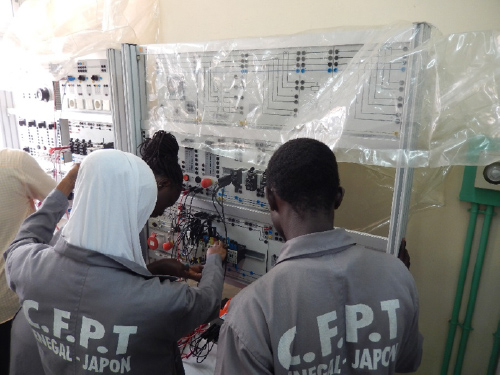
In the 1980’s the Senegal government desired to shift from an economy that was dependent on agricultural to an industrial economy, however, domestically there was an extreme shortage of technicians to shoulder the necessary responsibilities of the various industrial fields. At that point, in 1984 the Japanese government established the Vocational and Technical Training Center (CFPT). After that, the CFPT has appropriately captured the needs for industrial human resource development in Senegal, and based on the needs of the era has repeatedly revised its subjects and sent high quality human resources into society.
In recent years, industry has diversified and modernized, and the need for technicians in the private sphere has become even more important. To meet these needs, CFPT has started vocational training directed toward technicians who are currently employed. The purpose of the current survey is to examine whether the equipment requested by the CFPT is really necessary, and, if the requested support is provided, what results can be expected. Planning will be conducted by taking into account the results of the survey.
Up until now, the Japanese government, in preparation for the opening the CFPT, has conducted grant aid 2 times, has dispatched JICA experts, and has held trainings, etc., for CFPT instructors in Japan. Long-term support has been continuously conducted. Since 2003, our company has been the responsible consultant for 3 grant aid projects. We have made aggressive use of the knowledge that we have accumulated since our founding, and through our support of the CFPT have contributed to the cultivation of the industrial human resources of Senegal.
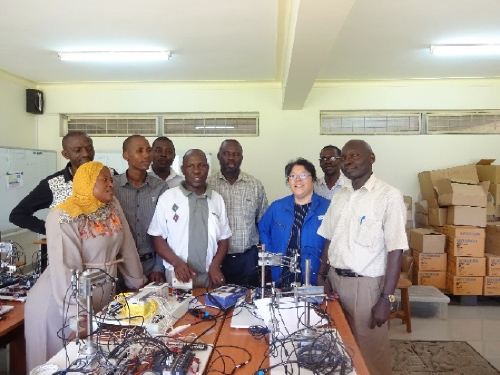
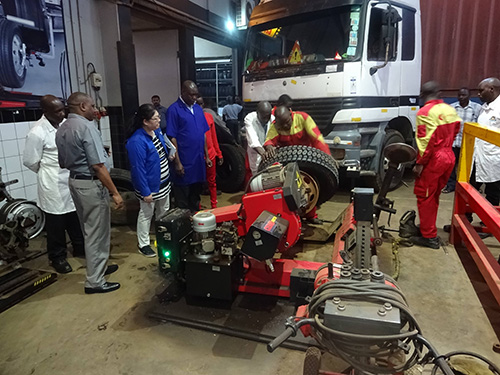
Recently, the Republic of Uganda has achieved stable economic development. However, the majority of its technicians are foreigners, and youth employment is a major issue. Although the outbreak of the civil war interrupted the cooperation efforts, from 1968 on Japan has supported the system improvement of the Nakawa Vocational Training Institute and the cultivation its educators. It has become the top vocational training school in Uganda.
However, accompanying the expansion of the industrial needs of Uganda, while the need for more advanced technical levels has increased, the theoretical bias in the technical education and the resulting lack of practical ability has been pointed out. Our company, in addition to conducting project management, is supporting strengthening of the human resource cultivation function to respond to such needs of the industrial sector. Concretely, we are giving advice and providing technical knowledge transfer to the principal and vice principal of the Nakawa Vocational Training Institute, supporting the establishment of a junior college, and utilizing connections with the industrial sector to develop a practical training course. Also, using the institute as a base, we are aiming to improve the vocational training of Uganda overall.
In Uganda’s industrial sector, female technicians are still a distinct minority. However, through the project, we are very happy that we could offer the opportunity for as many women as possible to receive training as vocational education trainers. This is also a strong source of motivation for us.
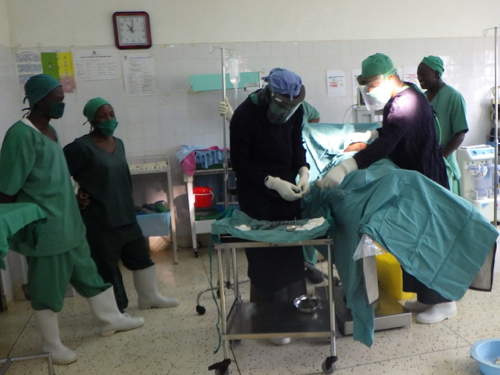
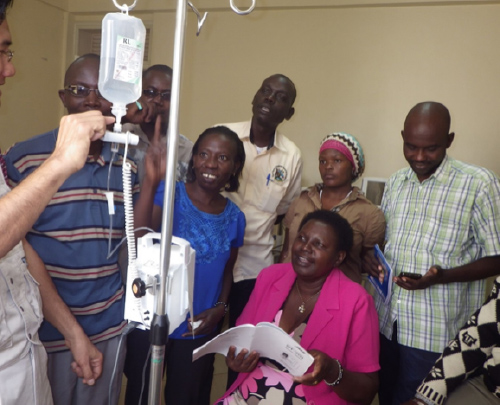
Uganda, in addition to the effects of a civil war that began in the 80’s and continued for 20 years, currently, it is receiving many refugees from unstable surrounding countries (Republic of South Sudan, Democratic Republic of the Congo).
Uganda has 14 Regional Referral Hospitals (Regional base hospitals to which patients are sent that could not be accepted by lower level hospitals), and due to the effect of the population increase and the acceptance of refugees, the number of patients in each core regional hospital has increased. Up until now, proceeding in the order of the eastern region, the central region, the western region and the northern region, the Japanese government has conducted grant aid projects for the provision of facilities and equipment. Within these projects, for a total of 6 core regional hospitals in the western and northern regions, INTEM has managed the planning for the provision of equipment. During the survey period, there were cases where the surgical lights stopped working and were replaced by household type light bulbs. In the 1970s there were cases where sterilizers were used while being constantly repaired, and the insufficiency and aging of medical devices was prominent. By providing facilities and medical equipment, this project contributes to the improvement of the medical level of the hospitals and the surrounding areas.
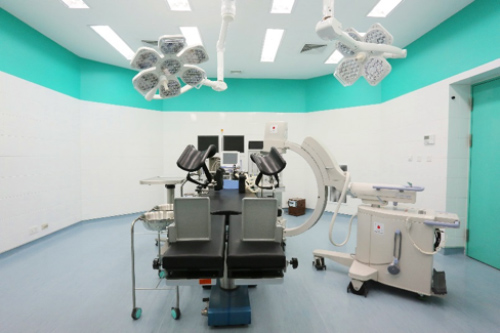
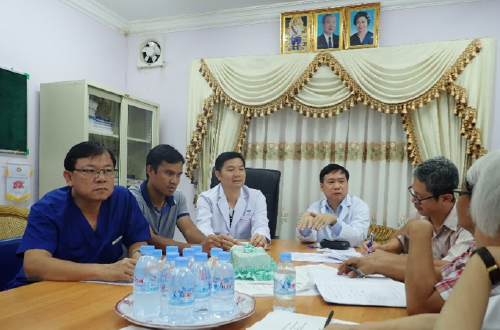
Japan has conducted significant support for Cambodia’s healthcare area. Japan has especially focused on the provincial hospitals, and up until now, facilities and equipment have been provided in 6 grant aid projects.
Up until now INTEM has conducted numerous projects in Cambodia, and in the same manner as technical cooperation projects in fisheries sector, we have been heavily involved in projects for the provision of equipment for Cambodia’s provincial hospitals. Up until now, we have created medical equipment and facility provision plans for Preah Sihanouk, Svay Rieng Province, Battambang Province, and Siem Reap Province, and we have also conducted other independent equipment project.
We have created plans for devices starting with but not limited to, diagnostic medical imaging equipment, devices for operating rooms, examination room devices, hospital ward devices, sterilization devices. We have also created plans for a wide range of devices such as those for Ear, Nose and Throat (ENT) Departments and Denttal Departments, leading to improvement of the level of the overall hospital. As consultants, we have knowledge concerning a wide range of medical equipment, and by accurately understanding doctors requests, we assume the role of creating plans for the appropriate medical equipment for each hospital.
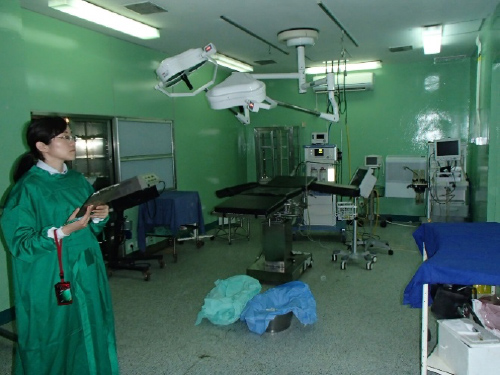
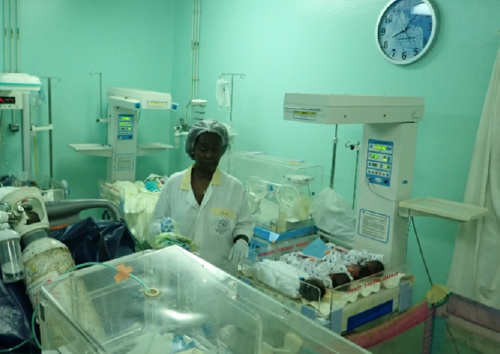
Côte d’Ivoire experienced a civil war that from 2002, and for 9 years the country was closed to the outside world. After the conclusion of the civil war, economic recovery has proceeded smoothly, but there are still many issues in the medical area.
For the Cocody University Hospital located in the capital, regarding the Maternal and Child Health area, we conducted a project for the provision of buildings and medical equipment. During the survey, there were 4 infants sleeping in 1 infant incubator, and we were surprised to find that devices that had been contributed by Japanese grant aid 25 years ago were still in use.
INTEM was in charge of creating a plan for which medical equipment were necessary for which hospital, and we advanced this project in a joint venture with a consultant for architecture. Even if when saying that we are conducting support in the Maternal and Child Health area, other areas including the operating room, ICU, emergency room, examination room and hospital wards are also involved. All the doctors have various dreams, and determining the degree to which those dreams can be made reality and assisting in that realization is our role as consultants.
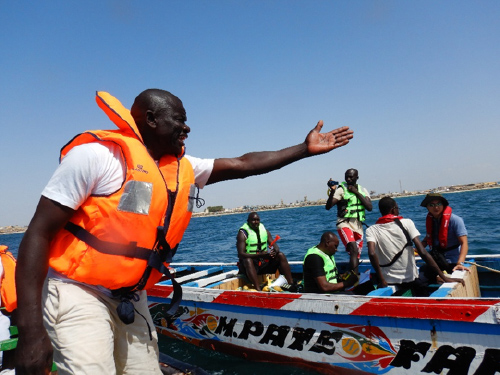
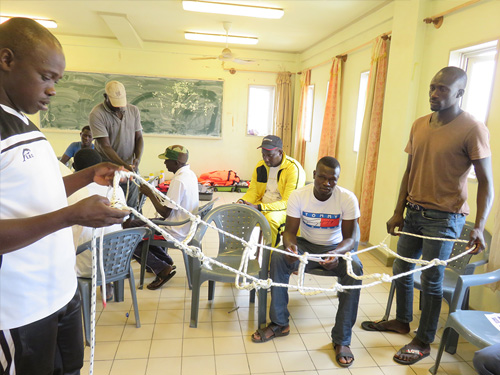
Senegal is a major fishing country in which 17% of the population is involved in the fisheries industry. However, the majority of these are tiny scale fishers operating wooden boats, and they face various problems. Especially, the low level of fishing management skill and the frequent occurrence of marine accidents are considered to be problems. Although there are many fishers who fishers who aim to achieve sustainable sue and are involved in resource management, illegal fishing operation that doesn’t follow the rules (IUU fishing*) also has deep roots, and the government has not taken sufficient countermeasures. Also, due to problems with fishing boat structures and engines, and safety devices, etc., in 2017 the number of fatalities due to marine accidents reading 140 persons. * Illegal, Unreported & Unregulated fishing
IUU and marine accidents have become a common worldwide problem, and in recent years have been seen as important areas in Japan’s aid policy. This survey investigates the status and issues of IUU fishing and marine accidents in Senegal, which is a central country in western Africa. In addition, concerning the concrete technical issues, demonstrations were conducted through a pilot program, and recommendations were on the direction of aid from a practical perspective.
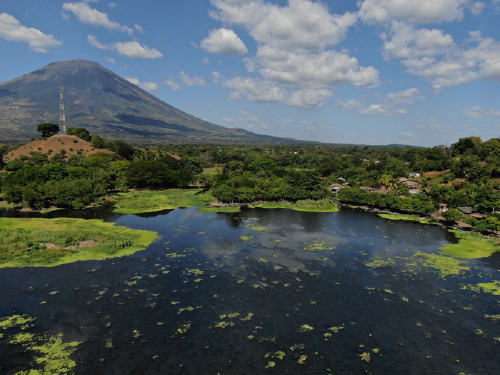
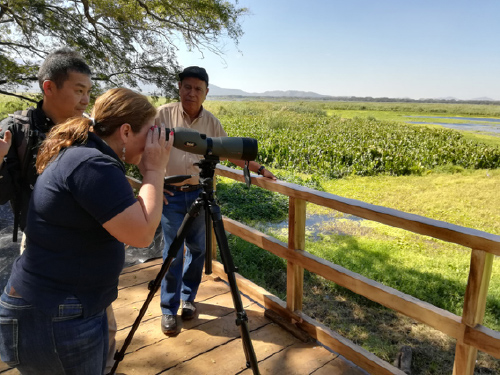
El Salvador is located in the heart of Central America, and it occupies a key position in transportation and distribution. However, its development was delayed by the influence of a long civil war. Development was especially delayed in the eastern region, which is the site of the project. The income disparity in the eastern region stands out, and awareness concerning the preservation of the ecosystem is not high. There are 7 registered Ramsar Convention sites in El Salvador. This project aimed at improving the wetland management ability of El Salvador’s Ministry of Environment and Natural Resources.
In this project, a national wetland committee and 7 local wetland committees were established, and the wetland management plan was decided. Then, based on the wetland management plan, 4 pilot projects were conducted.
1. Wetland ecosystem and wildlife habitat preservation
2. Creation of wetland value through environmental education/communication
3. Utilization of ecosystems for disaster prevention/fire prevention, through the optimization of use of agricultural lands
4. Optimization of the sugar cane cultivation method aiming to achieve wise use
Going forward, we will use the results of this activity as a model to be disseminated to other wetlands. Through this activity we will improve the wetland management ability of the Ministry of Environment and Natural Resources
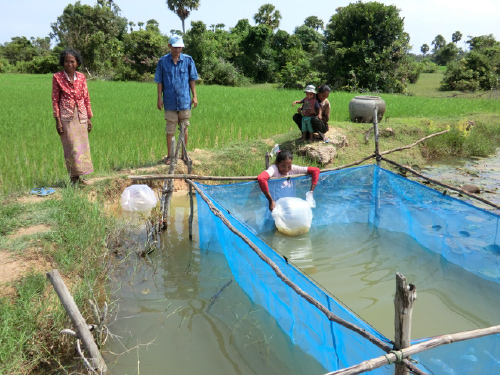
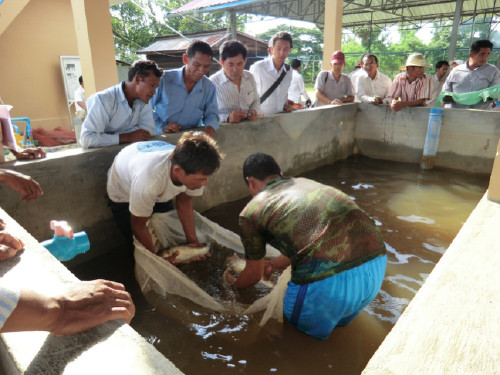
Cambodian citizens consume 52.5kgs of fish annual, placing them 4th in the world. There was a strong interest in using paddy fields, canals and ponds to conduct small scale aquaculture. However, farmers’ practice of aquaculture was hindered by their lack of knowhow and fish seeds for cultivation. This project was aquaculture technology conducted with a low monetary investment by utilizing existing rice fields and ponds and by using secondary agricultural products as feed. In addition, fish seed production technology was introduced using a simple incubator facility, and emphasis was placed on cultivating fish seed production farmers. The project aimed to disseminate aquaculture techniques on a farmer to farmer basis by using the approach of training sessions held between farmers that were suited to the conditions of each village. During the 2 periods of Phase 1 (February 2005 –February 2010), and Phase 2 (March 2011- March 2015), it was possible to cultivate over 9000 households, and 3000 households, respectively. The project not only achieved the obtainment of food, improvement of nutrition, and improvement of household finances in Cambodian villages, but also demonstrated that technology transfer between farming households was one effective method of promoting village development.
タンザニア国の地方道路事業では、Labor-based Technology(LBT:最低限必要な機械を使用する以外、人力で道路整備を行う労働集約型の工法)を活用した道路事業が推進されています。
本案件は、地方道路局職員(発注者)および道路施工業者(受注者)を対象とした能力強化支援を目的とし、弊社は「モニタリング専門家」として参画しました。
タンザニアの地方道路開発・維持管理では、財源不足、発注者・受注者の技術・経験不足、機材不足、執行予算の遅延問題等が課題であり、限られた予算内での業務改善、政府職員や施工業者の能力強化、並びに地方道路開発・維持管理業務プロセスの改善が求められていました。
モニタリングとは、プロジェクト開始後、計画に基づく活動実施状況や成果の達成度を確認し、必要に応じて軌道修正を行うことです。実施期間中の様々な変化に対応して活動や成果を見直すことから、プロジェクト管理の柱となっています。例えば、地方道路の主要な利用者である地域住民の満足度調査を実施し、住民の声を地方道路整備事業に反映し、住民が利用しやすい道路づくりを目指しました。
またプロジェクトの終了後も持続的に活動できるよう、モニタリング手法の仕組み作りを協力しました。
ブータンは山岳地帯に属し農地が狭いため、農作業の効率は概して低いこと、若年層の都市への流出および農村人口の高齢化による労働力不足が顕在化していることから、農業機械化政策が推進されてきました。
同政策の根幹である農業機械の導入は、20年以上に渡り日本が支援しており、その実施を担うのが農林省農業機械化センター(AMC)です。
ブータン側の事業体制の強化・効率化および自立に向けた取組みを支援するため、AMCを拠点とする技術協力「農業機械化強化プロジェクト(2008 ~2011年)」が実施されました。
続いて、農業機械の性能・安全性について国家認証標準の作成、農業機械の改良・開発やその効率的な利用促進を図るため、「農業機械化強化プロジェクト・フェーズ2(2014~2017年)」が実施されました。
AMCは、モニタリング・評価(M&E)セクションを設立しましたが、効果的なモニタリングを遂行できませんでした。
このような状況の中、弊社は業務の実施状況にかかるモニタリング能力を強化し、業務改善へのアクションにつなげるための指導を行いました。
現地では、年次活動計画の作成にかかるワークショップの開催、データ収集様式を含むモニタリング手法の確立、AMCの目標設定とその実現に向けたアクション、並びに達成度を測定するための指標設定を行いました。
外部評価者が、終了した事業を総合的に評価し、終了後も効果が発現しているかを客観的に検証することを事後評価といいます。
評価結果を通じて得られた提言や教訓は、評価対象プロジェクトの改善に役立てるとともに、今後、類似のプロジェクトの計画や実施に活用されます。
この案件では、次の4つのプロジェクトを評価しました。
①カンボジア:無償資金協力の地方州都における配水管改修及び拡張計画
②タイ:技術協力のチャオプラヤ川流域洪水対策プロジェクト
③ラオス:無償資金協力のチャンパサック県及びサバナケット県学校環境改善計画
④ラオス:無償資金協力の南部三県学校環境改善計画
①の事後評価では、プレアシハヌーク、バッタンバン、プルサットの3州都の水道局を訪問し、改修された配水管網がきちんと使われているか、利用者が計画どおりに増えたかなどについて、インタビュー等を通じて調査し、大きな成果が出ていることを確認しました。
地方での調査は順調に進んだ一方で、首都プノンペンの責任機関、工業・手工芸省に何度もアポイントを取ろうと試みましたが、なかなか担当者に会うことができず、最後の最後にやっと少しだけ話をすることができ、評価以外の部分で大変苦労しました。
エジプトは国立大学の授業料が無償であることから学生数が増加しており、教員一人当たりの学生数が増大したため教育の質の低下が深刻化しています。
また、講義は座学による理論中心で、実践的・先端的な教育を行う大学は限られていることから優秀な人材の国外流出が問題となっています。
そうした中、2009年に日本・エジプト両政府は、日本の工学教育の特徴を活かし、「少人数、大学院・研究中心、実践的かつ国際水準の教育提供」をコンセプトにした、エジプト日本科学技術大学(E-JUST: Egypt-Japan University of Science and Technology)設立に関する二国間協定を締結しました。
弊社はこの協定のなかで無償資金協力プロジェクトのコンサルタント業務をJICAより請け負っています。日本の事業スコープは、新設される工学部8学科に対する研究・実習機材の整備です。エジプト側はキャンパス建設です。
コンサルタント業務として現地調査(国家計画、担当教授との打合せ、図面確認、現場確認、市場調査、予算状況など)、帰国後のプロジェクト案のまとめ、事業予算積算、入札、契約、調達監理、そして最終段階は現地での施工監理・引渡しまでを行います。
あしかけ7年を想定しなければならない長期のプロジェクトです。
モザンビークは石炭・天然ガスなどの天然資源に恵まれ、多くの外国企業が進出し投資を拡大する一方、建設・土木分野や溶接・鋼材加工分野の技術者が著しく不足しています。
モザンビーク政府は産業人材の育成のため、職業訓練の機会拡大と質の向上に取り組んでいますが、職業訓練機材の不足や施設の老朽化のため、十分な訓練が提供できていないのが実情です。
本事業では、北部、中部、南部それぞれの中心都市であるナンプラ州ナカラ市、ザンベジア州キリマネ市及びマプト州マトラ市の3ヵ所の職業訓練センターの機材と施設の整備を行うことにより、職業訓練の質の向上を図り、地域の産業人材育成に寄与するものです。
本事業の実施により、質の高い職業訓練機会の提供が可能になり、産業ニーズに合致した人材育成を通じて地域の産業振興、経済活性化に貢献することが期待されます。
南アフリカでは、アパルトヘイト撤廃後、1994年の総選挙でマンデラ大統領が誕生し、急ピッチで新しい施策が打ち出されました。しかし、新カリキュラムのもと、25年たった現在も、児童・生徒の特に算数・数学の学力向上が果たせないでいます。
悩みのひとつは、日本の中学生位になっても、自分の指や描いた丸を数えて計算の答えを求めようとする子どもが多いことです。数の位取り、繰り上がりのある足し算や繰り下がりのある引き算、九九を、低学年の内にしっかり身に着けるための指導を受けていないからです。
カウンターパートである基礎教育省も、やっと低学年の算数教育に大きな関心を持ち始めましたが、これだ!というアプローチを先生たちに示すことが出来ないでいました。
そこで弊社は、まず先生たちに理解していただけて、かつ子どもたちが自分で考える楽しさを味わえる算数学習のヒントを盛り込んだ指導案作成とカリキュラムの見直しについて技術支援しています。
1980年代のセネガル政府は、農業依存の経済から工業に転換することを望んでいましたが、国内では工業分野を担う技術者が圧倒的に不足していました。
そこで日本政府は、1984年にセネガル日本職業訓練センター(CFPT)を設立し、開校以来、セネガルの産業人材育成ニーズを的確に捉え、その時代に応じて学科再編を繰り返しながら質の高い人材を社会に送り出してきました。
近年では産業が多様化・近代化したため、民間分野での技術者がより必要になってきています。このニーズに対応するため、CFPTは民間企業に在職する技術者向けの訓練を開始しました。
本調査は、CFPTから要請された機材が本当に必要なのか、本支援を行うことで、どのような効果が期待されるのか等を検討し、その調査結果を踏まえた計画を立てるものです。
これまで日本政府は、CFPTの開校準備のための無償資金協力を実施して以降2回(2003年、2010年)の無償資金協力、JICA専門家派遣、CFPT指導員の日本での研修など、息の長い支援を継続しています。
弊社は、2003年から3度にわたり無償資金協力を担当することになり、弊社設立以降培ってきた知見を大いに活用し、CFPTへの支援を通じたセネガルの産業人材育成に貢献しています。
ウガンダ共和国は、近年堅調な経済発展を遂げていますが、技術者の多くが外国人であり、若者の雇用が大きな課題です。
日本は、内戦勃発による協力中断はあったものの、1968年以降、同国のナカワ職業訓練校の訓練体制整備や指導員育成を継続的に支援し、同行は国内トップの職業訓練校となりました。
しかし同国の産業ニーズの拡大に伴い、技術レベルのニーズが高度化している一方、技術者教育は知識偏重で実践力不足と指摘されています。
弊社は、プロジェクトの運営管理を行うとともに、こうした産業界のニーズに応える人材育成機能の強化を支援しています。具体的には、ナカワ職業訓練校の校長及び指導員へ助言・指導や技術移転、短大の設立支援、産業界との連携による実践的なコース開発と実施です。また、同校を産業人材育成拠点とした、ウガンダ全体の職業訓練の質の向上を目指しています。
同国の産業界では、女性の技術者はまだまだ少数派ですが、プロジェクトを通じて一人でも多くの女性の職業訓練指導員に研修機会が提供できていることは、とても嬉しく、またやりがいを感じています。
ウガンダは1980年代から約20年続いた内戦の影響を受けたほか、現在は治安の不安定な周辺国(南スーダン共和国、コンゴ民主共和国等)からの難民を多く受け入れています。
ウガンダには地域中核病院(周辺の下位病院で対応できなかった患者が送られてくる地域の拠点病院)が14病院ありますが、人口増加や難民受け入れの影響で各地域中核病院の患者数は増加してきています。
日本政府はこれまで東部→中部→西部→北部と、地域ごとに地域中核病院へ施設と機材を整備する無償資金協力案件を実施してきました。
弊社はこのうち、「西部」と「北部」案件で合計6つの地域中核病院の機材計画を担当しました。
調査時には、手術室の無影灯が故障しており家庭用の電球を無影灯に取り付けて使用していたり、1970年代の滅菌機を修理し続けながら使用していたりと、医療機材の不足・老朽化が顕著でした。
本案件で施設と医療機材を整備することで、病院とその周辺地域の医療レベル向上に貢献します。
日本はカンボジアの保健医療分野に対し、数多く支援をしてきました。特に州病院に対しては力を入れており、これまで6件の無償資金協力案件で施設と医療機材の整備を行ってきました。
弊社はカンボジアの案件をこれまでたくさん実施してきており、技術協力プロジェクト同様、カンボジアの州病院整備案件には多く携わっております。
これまでシハヌーク州、スバイリエン州、バッタンバン州、シェムリアップ州で医療機材と施設整備の計画をしており、それ以外にも機材単独の案件も実施しています。
機材計画では画像診断機器、手術室機器を始め、検査室機器、病棟用機器、滅菌用機器のみならず、耳鼻科、歯科機器など幅広い機材を計画し、病院全体の底上げに貢献しています。
我々コンサルタントは多岐に渡る機材に関する知識を持ち、ドクターの要望を的確に理解しながら、各病院に適切な機材を計画する役割を担っています。
コートジボワールは2002年から内戦があり、およそ9年間閉ざされた状況になっていました。
内戦終結以降、順調に経済は回復していますが、医療分野ではまだ課題が多いです。
我々は首都にあるココディ大学病院の、特に母子保健分野に対し、建物と医療機材を供与するプロジェクトを行っています。
調査をした時にはひとつの保育器に赤ちゃんが4人寝ていたり、25年前に日本の無償で供与した機材を未だに使用していたりと驚くことがたくさんありました。
インテムはどのような医療機材がこの病院に必要なのか計画する担当で、建物を建てる建築コンサルタント会社とJVを組んでこの案件を進めています。
母子保健分野への協力といってもその分野を運用するには、手術室、ICU、救急、検査室、病棟などたくさんの部門が関わってきますので、現地ではそれらの部門のドクターと細かく打ち合わせをしながら設計を進めています。
ドクターはみな、さまざまな夢を抱いているので、夢をどこまで現実に変えられるのか、そのお手伝いをするのが我々コンサルタントの役割です。
セネガルは就業人口の17%が水産業に従事している水産大国です。しかしその多くは木造の小さな漁船で操業する零細漁業者で、様々な問題を抱えています。特に、漁業管理能力の未熟さと多発する海難事故は大きな問題とされてきました。
資源の持続的利用を目指して資源管理に取り組む漁業者も多い一方で、ルールを守らない違法操業(IUU漁業)も根強く、政府は十分な対策が取れないでいます。
また、漁船の構造やエンジン、安全装備などの問題で、2017年の海難事故による死亡者数は140名にも上っているのです。
IUU漁業や海難事故は世界的な共通課題となっており、近年の日本の援助方針のひとつとしても重要視されています。本調査では西アフリカの中心国であるセネガルのIUU漁業・海難事故の現状と課題を調査し、また具体的な技術的課題についてパイロットプロジェクトによる実証を行い、実践的な視点からの援助の方向性について提言を行いました。
エルサルバドルは中央アメリカの中心に位置し、交通・物流の要衝として重要な位置を占めていますが、長年の内戦の影響で開発が遅れています。
プロジェクトサイトがある東部地域は、特に開発が遅れ、貧富の格差が顕著で、生態系保全に関する意識が高くありません。
同国にはラムサール条約に登録された7つの湿地があります。プロジェクトでは、同国環境省の湿地管理能力向上を目指しています。
プロジェクトでは、国家湿地委員会と7つの地方湿地委員会を立ち上げ、湿地管理計画を策定いたしました。そして湿地管理計画に基づいて、4つのパイロットプロジェクトを実施しています。
1. 湿地生態系、野生生物の生息地の保全
2. 環境教育・コミュニケーションによる湿地の価値創造
3. 農業用地の利用適正化による、生態系を活用した防災・減災
4. 湿地のワイズユーズを目指したサトウキビ栽培方法の適正化
今後はこれまでの活動の成果をモデルとして、同国の他の湿地に普及させていきます。その活動を通じて環境省の湿地管理能力を強化していきます。
カンボジア国民1人当たりの年間魚消費量は52.4kgと世界で4番目に高く、水田、水路、ため池などを利用した小規模養殖に対する関心には高いものがありましたが、飼育のノウハウと養殖用種苗不足が農家の養殖実践の妨げになっていました。
プロジェクトは、既存の稲田や溜め池などを利用し、農業副産物などを補完的飼料として与える低投入で実践できる養殖技術、さらに簡素な孵化施設による種苗生産技術を導入し、種苗生産農家を重点的に育成し、農家から農家への養殖技術普及を行う農民間研修アプローチにより村落状況に適合した技術普及を目指し、フェーズ1(2005年2月~5年)、フェーズ2(2011年3月~4年)の2期で各々9,000戸、3,000戸を超える農家を育成することができました。
カンボジアの村落での食料確保、栄養改善、家計改善だけではなく、農民間の技術普及が村落開発の効果的な手段のひとつであることを実証するプロジェクトとなりました。
In order to solve gender issues arising from social norms and cultural backgrounds, ODA projects are required to promote efforts from a gender perspective (gender mainstreaming) at each stage of planning, implementation, monitoring, and evaluation.
In addition, for the development of developing countries, it is important for government officials to understand the issues and needs of residents and to plan and implement projects that benefit them in cooperation with various organizations and local governments under the development policies stated by the government.
INTEM Consulting, Inc. provides consulting services to support the promotion of gender equality and the empowerment of women and girls, as well as advisory services for development policies.
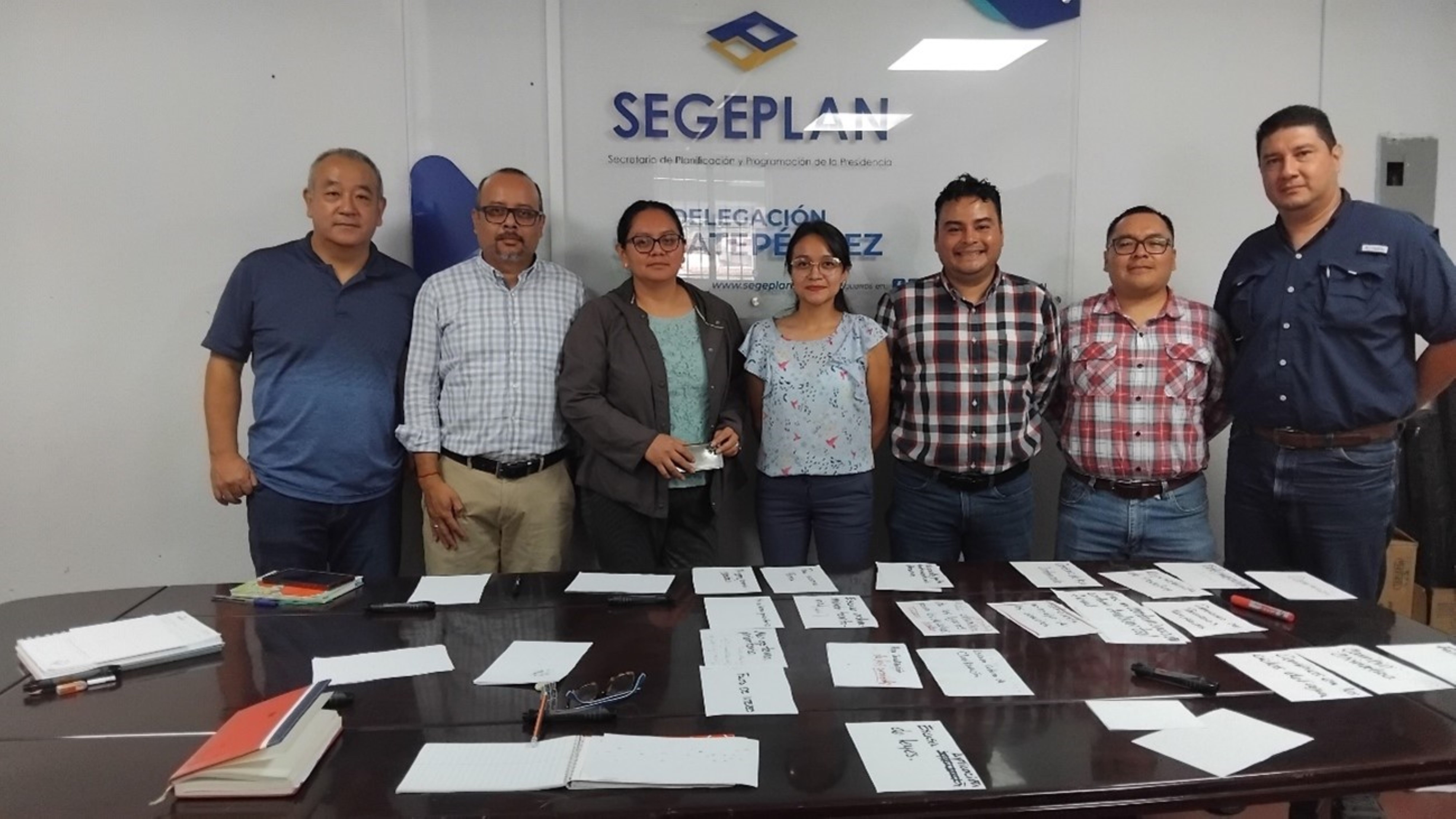
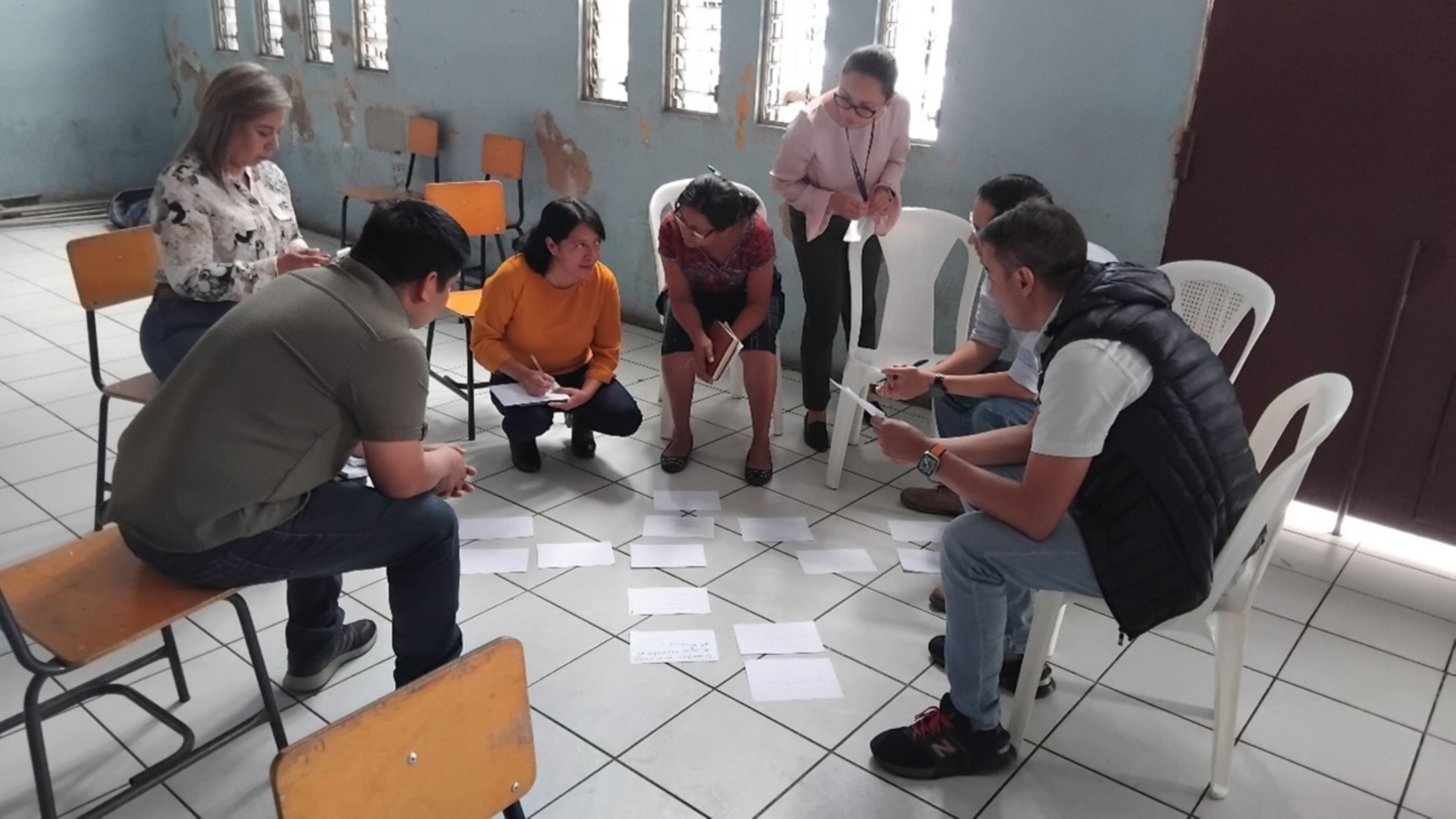
Guatemala, known in Japan as the land of coffee, is a multi-ethnic country in Central America where indigenous Mayan people make up more than 40% of the population.
Although the Planning Agency of the President’s Office provides guidance to central ministries and local governments on the formulation of development plans and monitoring and evaluation methods at different levels such as the national, sector, and city level, there are issues such as the limited opportunities for public participation in the planning stage, which means that plans are not recognized by the public, and cases where projects are sometimes not implemented in accordance with the plans.
As advisors to the Deputy Director of the Planning Agency of the Office of the President, our experts advise the Agency’s staff on participatory public policy, regional development planning, and sector planning and monitoring methods. The Planning Agency has offices in all 22 prefectures, and by strengthening the capacity of these offices to analyze issues, we expect to strengthen the capacity of city hall officials to whom we provide services, thereby contributing to the promotion of development policies in the region.
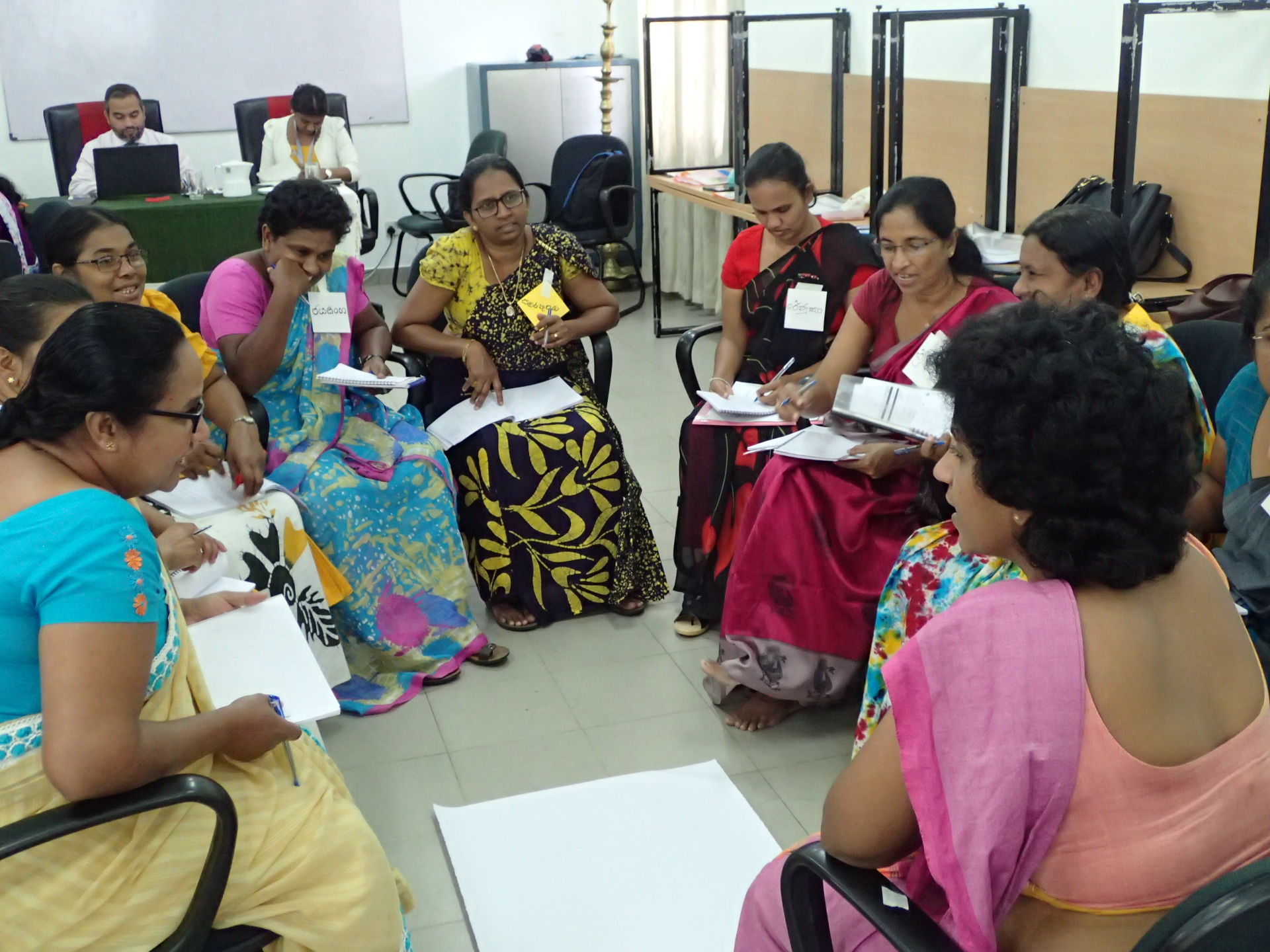
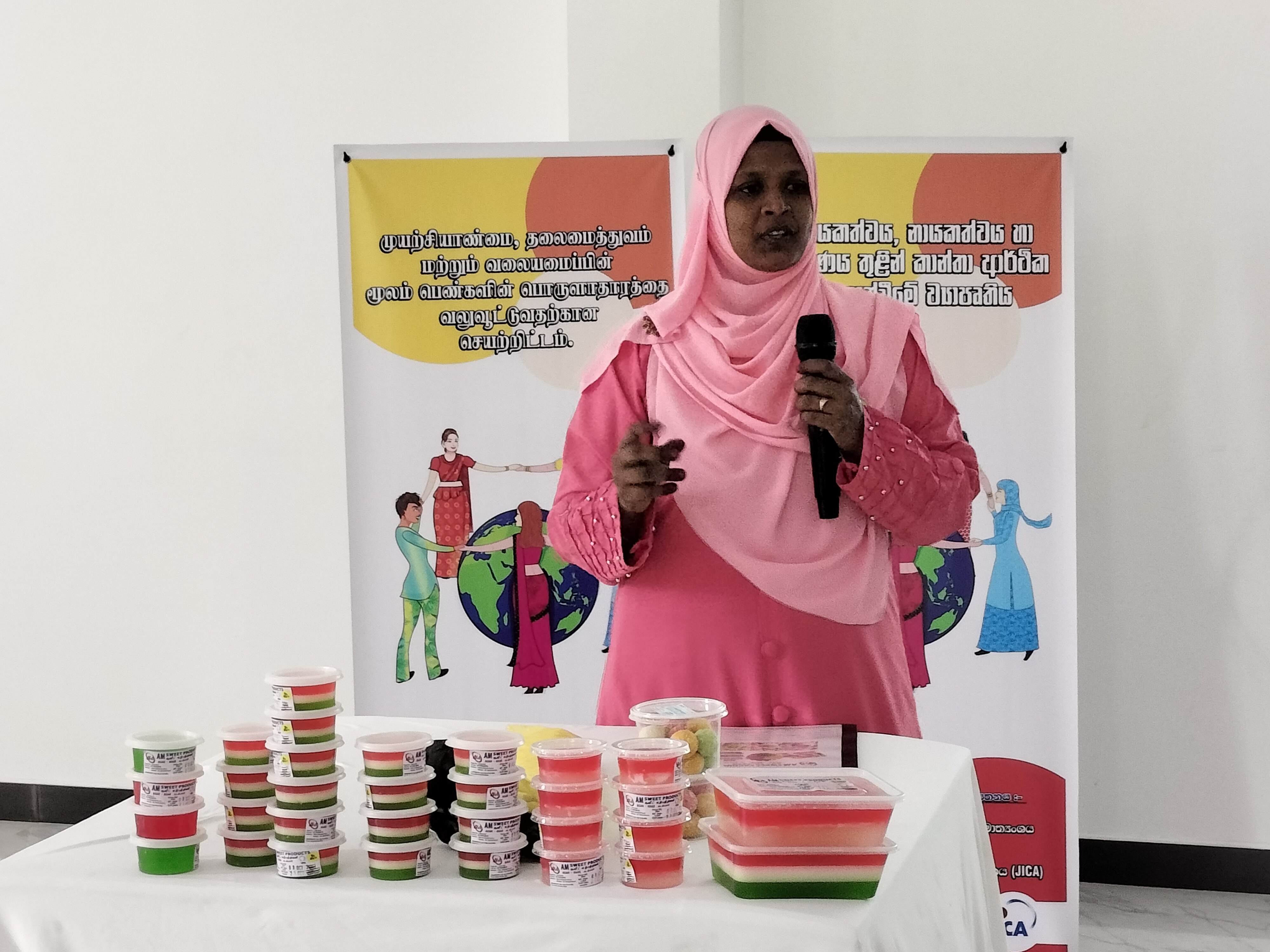
Sri Lanka, an island nation in the Indian Ocean in South Asia, has experienced steady economic growth since the end of domestic conflict in 2009. However, the terrorist incidents in 2019 and the spread of the new coronavirus disease (COVID-19) in 2020 and beyond have dealt a major blow to the economy.
Deteriorating economic conditions have had a particularly severe impact on women. This is due to gender-based social norms and gender division of labor roles that limit women’s access to work and economic opportunities, as well as their limited participation in household and community decision-making processes.
In Sri Lanka, under the Ministry of Women, Children, Youth and Sports (Ministry of Women’s Affairs), there is a Women Development Officer who implements field-level activities to improve the economic and social status of women, but the capacity of the Ministry is insufficient.
Against this background, the project is implementing pilot activities to support women entrepreneurs’ businesses in areas strongly affected by COVID-19 and the economic crisis, strengthening the capacity of WDOs, compiling their experiences into a “Women’s Economic Empowerment Model,” and is promoting the use of the model by the Ministry of Women’s Cooperation and its institutionalization.
社会規範や文化的背景により発生しているジェンダー課題の解決に向け、ODA事業では、立案・実施・モニタリング・評価の各段階において、ジェンダーの視点に立って取組を進めること(ジェンダー主流化)が求められています。
また、開発途上国の発展には、国が掲げる開発政策のもと、行政官が住民の課題やニーズをくみ取り、多様な機関や地方自治体と連携し、住民に裨益する事業を計画・実行してくことが重要です。
インテムコンサルティングでは、ジェンダー平等や女性・女児のエンパワメント推進の支援、また開発政策のアドバイザー業務にかかるコンサルティングサービスを提供しております。
コーヒーの国として日本では知られる中米のグアテマラは、マヤ系の先住民が人口の4割強を占める多民族国家です。
国、セクター、市といった異なるレベルの開発計画の策定とモニタリング評価手法は、大統領府企画庁が、中央省庁や地方自治体に指導していますが、計画策定の段階に住民参加の場が限られていることから、計画が住民に認識されていない、計画に沿った事業が実施されないことがある、といった課題があります。
弊社の専門家は、大統領府企画庁の副長官のアドバイザーとして、同庁職員に対して住民参加型の公共政策、地域開発計画、セクター計画の策定とモニタリング手法を、助言しています。また、企画庁は全22県に事務所を有しており、これらの事務所職員に対しても、課題分析能力強化を図ることで、サービスの提供先である市役所職員の能力が強化され、地域における開発政策が推進されることに寄与することが期待されています。
南アジアのインド洋に浮かぶ島国スリランカは、2009年の国内紛争終結後、着実に経済成長を遂げてきました。しかし、2019年のテロ事案や2020年以降の新型コロナ感染症(COVID-19)拡大は経済に大きな打撃を与えました。
経済状況の悪化は、特に女性に深刻な影響を与えています。その背景には、ジェンダーに基づく社会規範や性分業役割によって女性の労働や経済機会へのアクセスが限られていること、世帯や地域における意思決定過程への参画が限られていることがあります。
スリランカでは、女性・子ども・若者・スポーツ省(女性省)下に、女性の経済的・社会的地位向上に向けたフィールドレベルでの活動を実施する女性開発官が配置されていますが、その能力は十分とは言えません。
このような背景を受け、プロジェクトでは、COVID-19や経済危機の影響を強く受けている地域において女性企業家のビジネスを支援するパイロット活動を実施し、WDOの能力強化を図るとともに、その経験を「女性の経済的エンパワメントモデル」として取り纏め、女性省によるモデルの活用の促進と制度化を目指した協力を実施しています。